Community Health
Physiotherapy
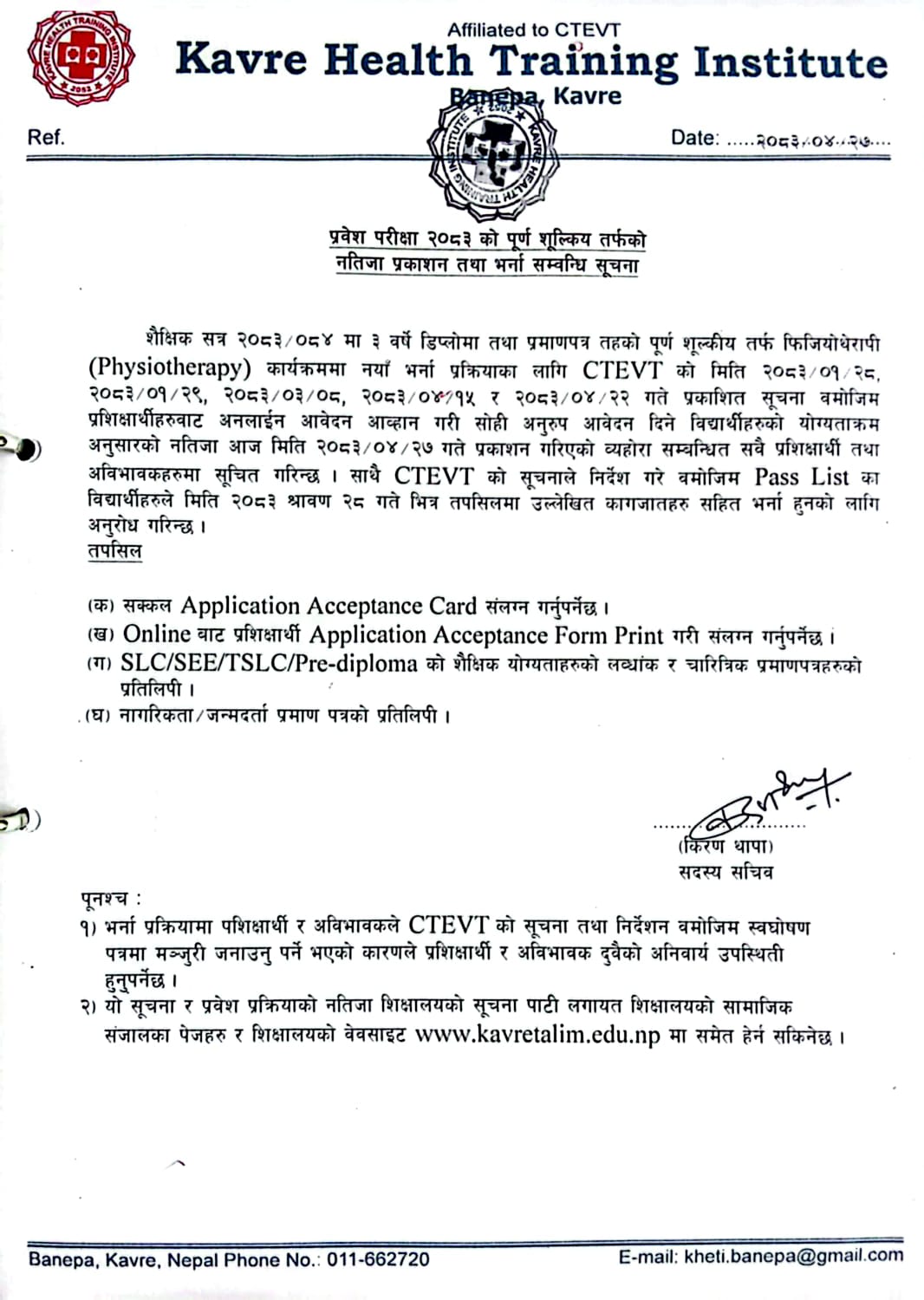
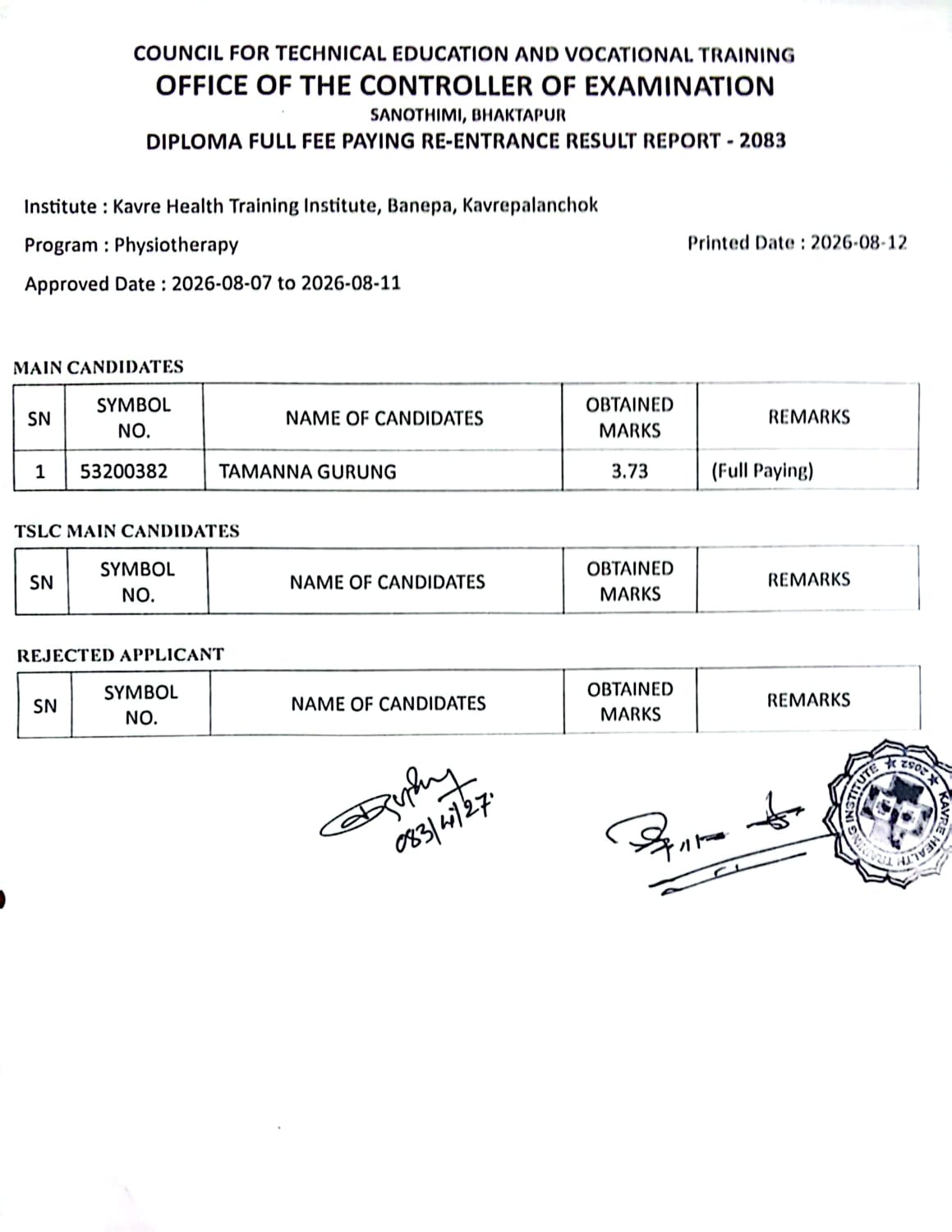
36-month program producing Physiotherapy qualified to serve in hospitals and health posts.
Schedule
6:30 AM to 2:30 PM ((includingpractical classes) 6 days a week.
About This Course
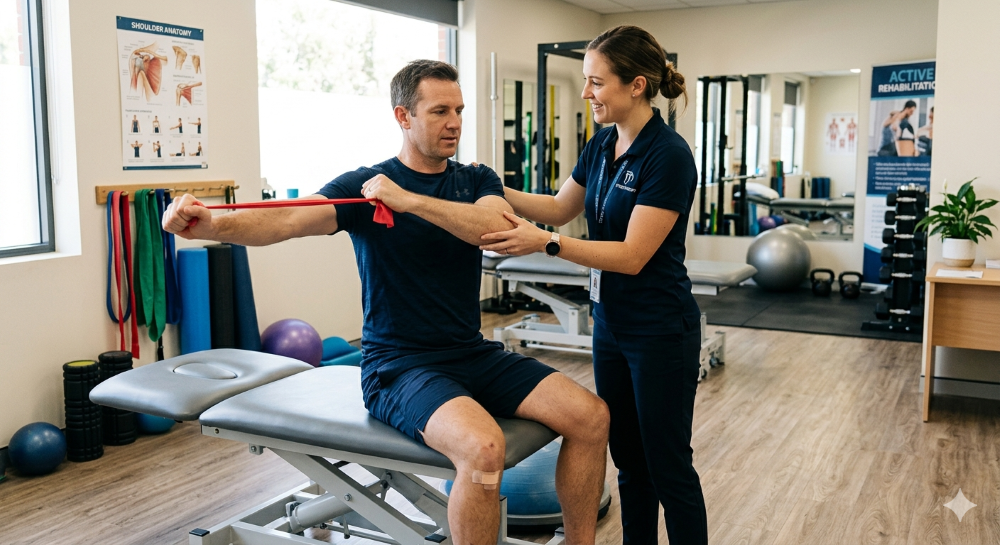
Physiotherapy is an emerging field in the health service sector. It is a healthcare profession dedicated to enhancing and restoring physical function and mobility. This holistic approach not only aids in physical healing but also promotes overall wellbeing, empowering individuals to lead more active, independent lives. This course is designed to produce middle level skilled physiotherapist equipped with sound knowledge, skills and attitudes. This field has been helping the societies and communities in fitness, treatment, habilitation and rehabilitation of various health conditions. It has been creating job opportunities both in public and private sectors as well as creating self-employment opportunities. This course has been designed based on the tasks required to be performed by a physiotherapy assistant in variety of clinical and community settings. The program extends over three academic years.
The course has been refined to meet the current needs in a broad area of practice. Nepal is a disaster prone country with natural calamities. In addition, there are road traffic accidents and fall injuries adding to the disabilities. Globally, there is a rise in non-communicable diseases, aging population and disabilities increasing the demand of physiotherapy services. To cope with the national and international demands, the contents and the skills should be updated to make the skills relevant and pertinent to the health sector.
Eligibility
Minimum SLC/SEE pass. Age 18+
Fee According to the rules of CTEVT.
Curriculum
Year 1: Foundational Sciences
The first year is a common foundational layout shared across almost all CTEVT health programs, establishing a strong baseline in general science and basic medical concepts.
Subjects: English, Compulsory Nepali, Social Studies, Physics, Chemistry, Botany, Zoology, Mathematics & Statistics.
Disciplinary Core: Anatomy and Physiology, introducing the human musculoskeletal, nervous, and cardiovascular networks.
Year 2: Core Disciplinary Subjects
The focus shifts heavily toward the mechanics of physical therapy, medical equipment operation, and physical assessment.
Electrotherapy Modalities: The physics, safety, and application of therapeutic equipment such as Shortwave Diathermy (SWD), TENS (Transcutaneous Electrical Nerve Stimulation), Ultrasound therapy, Traction, and Infrared Radiation (IRR).
Therapeutic Exercises & Biomechanics: Understanding human levers, center of gravity, muscle testing (MMT), Range of Motion (ROM) exercises, and therapeutic massage.
Year 3: Advanced Clinical Application & Management
The final year focuses on pathology-specific treatments and extensive clinical postings in hospital settings.
Physiotherapy in Clinical Conditions I & II: Targeted rehabilitation strategies for distinct medical fields:
Orthopedics: Managing arthritis, fractures, spine deformities, and post-amputation recovery.
Neurology: Rehabilitation for Stroke (CVA), Spinal Cord Injuries, and Cerebral Palsy (CP).
Cardiopulmonary: Post-surgical chest care and cardiac rehabilitation.
Community-Based Rehabilitation (CBR): Managing disabilities, introducing assistive devices (prosthetics/orthotics), and geriatric care within local rural communities.
Clinical Practices: A massive credit load dedicated to hands-on internship hours in hospital physiotherapy departments.
Career Prospects
The job market for physiotherapy in Nepal is experiencing a major boom. As public awareness shifts from simple curative medicine to holistic physical rehabilitation—driven by an aging population, an increase in orthopedic surgeries, lifestyle diseases, and sports injuries—the demand for skilled physiotherapy professionals is at an all-time high.
Depending on whether you hold a PCL/Diploma in Physiotherapy or a Bachelor of Physiotherapy (BPT), the career landscape opens up diverse pathways.
1. Key Employment Sectors in Nepal
A registered physiotherapy professional can secure employment across several high-demand areas:
Hospitals and Medical Colleges: Major central hospitals (like TU Teaching Hospital, Bir Hospital, and the Nepalese Army Institute of Health Sciences) and private medical colleges have dedicated, rapidly growing physiotherapy departments.
Specialized Rehabilitation Centers: Working with specialized setups focusing on Spinal Cord Injuries (SCI), Stroke/Neuro-rehabilitation, and Cerebral Palsy.
Fitness and Sports Organizations: Fitness centers, corporate wellness hubs, and sports governing bodies (like the All Nepal Football Association - ANFA) hire physiotherapists to manage athlete recovery and performance.
NGOs and INGOs: Organizations like PHASE Nepal, Humanity & Inclusion (HI), and various disability-focused groups run Community-Based Rehabilitation (CBR) programs. They frequently hire physiotherapists for field-based, highly impactful projects in rural or semi-urban areas.
Private Practice & Home Care: There is massive self-employment potential. Setting up an independent clinic or offering specialized home-visit care for geriatric or paralyzed patients is highly lucrative.
2. Salary Expectations and Compensation
Salaries vary cleanly based on your academic level, experience, and the geographic location of the deployment:
Qualification Level Sector Average Entry-Level (Monthly) Mid-to-Senior Tier (Monthly)
PCL / Diploma Private Hospital / Clinic NPR 18,000 – NPR 25,000 NPR 35,000 – NPR 50,000
PCL / Diploma NGO / Remote Projects NPR 35,000 – NPR 45,000 NPR 55,000 – NPR 65,000+ (often includes hardship allowances)
Bachelor (BPT) Private / Corporate NPR 30,000 – NPR 40,000 NPR 60,000 – NPR 90,000+
Bachelor (BPT) INGO / Specialized Field NPR 50,000 – NPR 65,000 NPR 95,000 – NPR 1,30,000+
 Featured